Where we start: a modern (nontheistic) understanding of the Jewish calendar
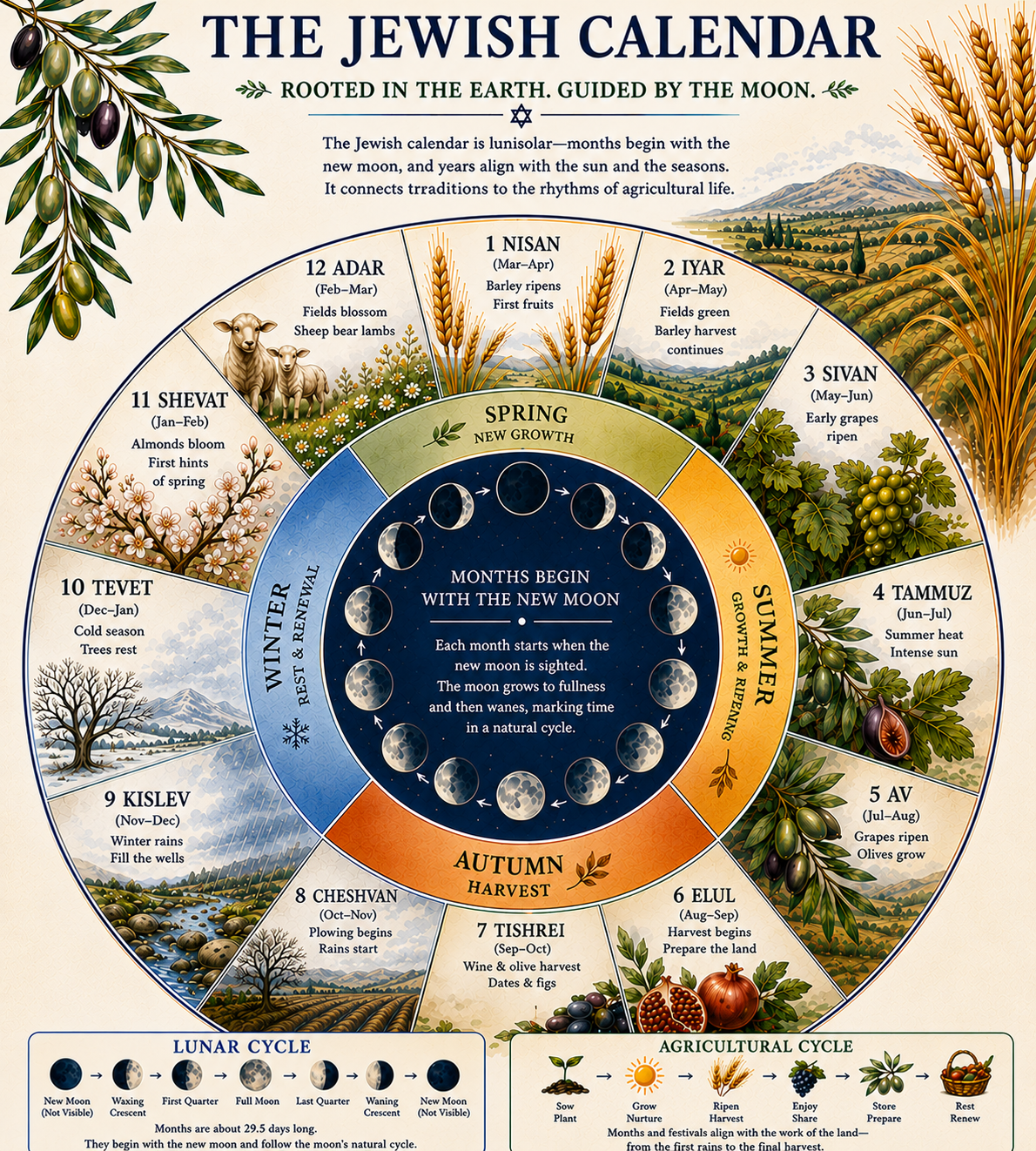
The Jewish calendar blends the moon's phases with the sun's seasons to create a timekeeping system deeply rooted in the natural world. Unlike purely solar or lunar calendars, this lunisolar system ensures that holidays always align with specific agricultural cycles and ecological shifts. You can think of the Jewish calendar as having both a lunar core and a solar anchor.
The Lunar Core and the Solar Anchor
The baseline of the Jewish calendar rests on the moon. Each new month begins with the Rosh Chodesh (the head of the month), marked by the appearance of the first sliver of the new moon. Because a lunar year is roughly 354 days—about 11 days shorter than a solar year—a purely lunar calendar would cause holidays to drift through different seasons.
To prevent this drift, the calendar incorporates a solar correction. Passover must always fall in the spring (Chag HaAviv, the Festival of Spring). To ensure this alignment, the calendar employs a 19-year Metonic cycle, inserting a 30-day leap month (Adar II) seven times within that period. This mechanical adjustment keeps human ritual in perfect sync with the Earth's orbit around the sun.
Micro-Cycles: The Energy of the Moon
The monthly lunar cycle mirrors a continuous process of growth, full expression, and renewal in nature.
- The Waxing Moon: The first half of the month represents planting, potential, and emerging light.
- The Full Moon: Major Jewish festivals—including Passover, Sukkot, and Tu BiShvat—occur precisely on the 15th day of the month. This is when the moon reflects maximum light, symbolizing the peak culmination of seasonal energy.
- The Waning Moon: The second half of the month invites introspection, harvesting, and preparation for renewal as the night darkens.
Macro-Cycles: The Four Agricultural Seasons
The calendar maps directly onto the agricultural realities of the ancient Near East, transforming ecological milestones into spiritual blueprints.
- Spring (Nisan): This is the beginning of the natural calendar cycle. It marks the ripening of the barley crop, the awakening of dormant soil, and themes of rebirth and liberation.
- Summer (Sivan to Elul): This period transitions from the wheat harvest during Shavuot to the dry, hot ripening of summer fruits. Nature operates at maximum productivity, leading into a period of late-summer introspection before the rains.
- Autumn (Tishrei): The agricultural year concludes with the final harvest of grapes, olives, and pomegranates. Sukkot, the harvest festival, celebrates this abundance while acknowledging human vulnerability by dwelling in temporary outdoor huts exposed to the elements.
- Winter (Cheshvan to Adar): This is the season of darkness, rain, and soil replenishment. It centers on Tu BiShvat (the New Year for Trees), celebrated when the earliest sap begins to rise in the trees, signaling hidden renewal long before visible blossoms appear.
By tethering time to both the moon and the sun, the Jewish calendar serves as an ecological compass. It reminds observers that human life does not operate separate from nature, but rather beats in tandem with the cosmic and terrestrial rhythms surrounding them.