Exploring Biblical Plants
A Self-Guided Study (in 2 - 3 hours) of Ancient Agriculture
The landscapes described in the Bible are filled with familiar plants—olive trees, vineyards, wheat fields, fig trees, herbs, and wildflowers. These plants were more than scenery; they formed the foundation of everyday life. They provided food, cooking oil, medicine, building materials, animal fodder, and goods for trade. Learning about them offers a window into how people adapted to a Mediterranean climate and organized their lives around the changing seasons.
This self-guided activity invites you to explore several of these plants through observation, research, and reflection. No prior knowledge of botany or history is needed.
Note: The planting and harvest times below reflect the traditional Mediterranean agricultural cycle of the ancient Near East. Exact dates varied depending on rainfall, elevation, and local climate.
Materials
Gather as many of the following as you can:
-
Olive oil
-
Olives
-
Grapes or raisins
-
Fresh or dried figs
-
Dates
-
A pomegranate
-
Whole wheat berries or wheat stalks (if available)
-
Barley (grain or photograph)
-
Lentils
-
Chickpeas
-
Almonds
-
Fresh herbs such as mint, dill, coriander (cilantro), rosemary, or thyme
-
Notebook or journal
-
Colored pencils (optional)
If you cannot obtain a particular plant, use a photograph instead.
Part 1: Learning About Plants
Olive
Planting: Young trees are planted during the rainy season (late autumn through winter).
Harvest: September–November.
Olive trees grow slowly but can remain productive for hundreds of years. Olive oil was valuable for cooking, preserving food, lighting lamps, making soap, and skin care.
Time to First Harvest: About 4–6 years, with full production often taking 10–20 years. Healthy trees can continue producing olives for several centuries.
Reflection: Why might a family invest in planting a tree that takes years before producing a large harvest?
Wheat
Planting: October–December, after the first autumn rains.
Harvest: April–May.
Wheat was the principal bread grain. Once harvested and dried, it could be stored for many months.
Time to First Harvest: 6–8 months.
Reflection: Why are grains often the foundation of civilizations?
Barley
Planting: October–December.
Harvest: March–April, several weeks before wheat.
Barley tolerates poorer soils and less rainfall than wheat, making it a dependable crop.
Time to First Harvest: 5–6 months.
Reflection: Why would farmers grow both barley and wheat instead of only one grain?
Grapes
Planting: New vines are planted during winter while dormant.
Harvest: July–September.
Grapes could be eaten fresh, dried into raisins, or processed into juice or vinegar. Mature vines often produced fruit for decades.
Time to First Harvest: 2–3 years, with full production in about 5 years.
Reflection: How does preserving fruit extend the usefulness of a harvest?
Fig
Planting: Young trees are planted during the rainy season.
Harvest: June–August (with some varieties producing a smaller early crop).
Figs are nutritious, easy to dry, and store well for later use.
Time to First Harvest: Usually 2–3 years, with larger harvests after 5 years.
Reflection: Why is food that stores well especially valuable?
Date Palm
Planting: Offshoots are planted during spring or early summer.
Harvest: August–October.
Date palms thrive in hot, dry climates and produce fruit rich in natural sugars.
Time to First Harvest: 4–8 years, depending on the variety and growing conditions.
Reflection: How do different climates influence the crops people choose to grow?
Lentils
Planting: November–December.
Harvest: April–May.
Lentils provide protein and improve soil fertility by fixing nitrogen.
Time to First Harvest: 5–6 months.
Reflection: How do legumes benefit both people and the land?
Chickpeas
Planting: February–March.
Harvest: June–July.
Chickpeas require less water than many crops and are an excellent source of protein.
Time to First Harvest: 4–5 months.
Reflection: Why might a farmer include legumes in a yearly planting plan?
Almond
Planting: Young trees are planted during the rainy season.
Harvest: August–September.
Almonds are rich in nutrients and can be stored for long periods. Almond trees are among the first to bloom each spring.
Time to First Harvest: 3–5 years, with full production often taking 7–10 years.
Reflection: What advantages do tree crops offer compared with annual crops?
Herbs (Mint, Dill, Coriander)
Planting: Late autumn through early spring, depending on the species.
Harvest: Spring through early summer, with repeated harvesting possible.
Herbs flavor food, attract pollinators, and many have traditional medicinal uses.
Time to First Harvest: Usually 30–90 days, depending on the herb.
Reflection: Besides cooking, what other purposes can herbs serve?
Part 2: Thinking Like an Ancient Farmer (30 minutes)
Imagine you are responsible for feeding a household throughout an entire year. Choose six plants from the list you have studied and fill out a chart ~ Try to include at least one grain, one legume, one fruit tree, one vine, and one herb.
| Name of Plant | When Planted | When Harvested | What it provides | Why I am planting it |
Part 3: The Agricultural Year (20 minutes)
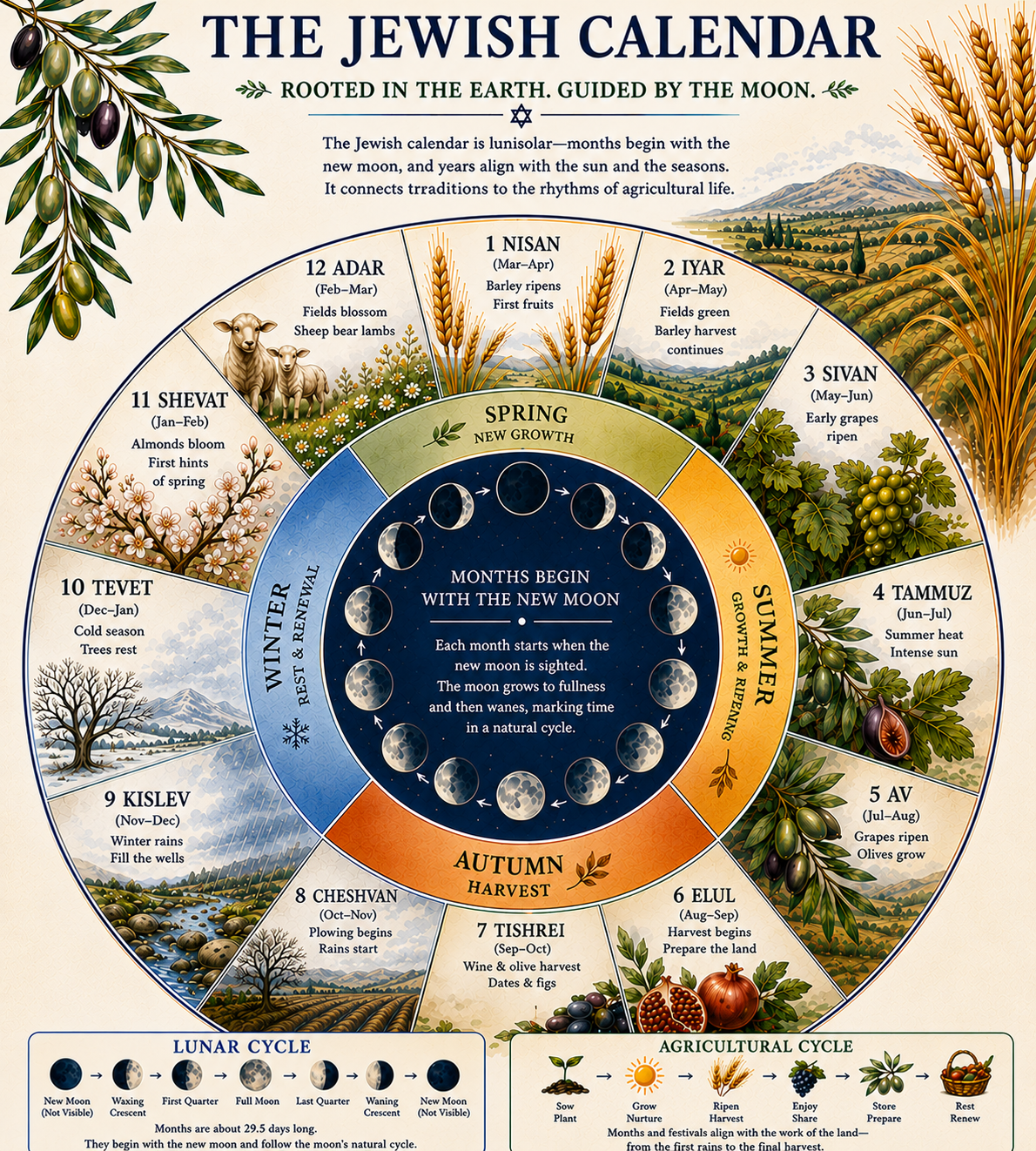
Using the information above, arrange the crops into a yearly cycle.
Autumn
-
Plant wheat
-
Plant barley
-
Plant lentils
-
Plant herbs
-
Plant young olive, fig, and almond trees
Winter
-
Continue planting after rains
-
Plant grapevines while dormant
-
Prune vineyards and orchards
Spring
-
Harvest barley
-
Harvest wheat
-
Harvest lentils
-
Harvest fresh herbs
-
Plant chickpeas
Summer
-
Harvest figs
-
Harvest grapes
-
Harvest chickpeas
Late Summer and Autumn
-
Harvest almonds
-
Harvest dates
-
Harvest olives
-
Harvest pomegranates
Notice how careful planning ensured that work—and food—was spread throughout the year rather than concentrated into a single season.
Part 4: Compare Past and Present (20 minutes)
Visit your kitchen or a grocery store and find five foods that come from plants included in this activity.
For each one, ask:
-
Where was it grown?
-
Could it be grown locally?
-
How far did it travel?
-
Would it have been available year-round in ancient times?
Takeaway
Ancient agriculture depended on understanding seasonal weather, soil conditions, and the growth habits of different plants. By combining grains, legumes, fruit trees, vines, and herbs, people created a resilient system that supplied food throughout the year while maintaining the productivity of the land.